.png)
 Twitter
 Facebook
 RSS
RSS Linkedin
Blog: Fixing Problem and High-Risk Projects

The subpoena shows up at the front desk and the call comes to you to pick it up. That nauseating feeling in your gut is the prelude to a long day… no… a long year. The lawyers want every contract and statement of work, each change order, log, email, document, physical mail, specification, test document, picture, drawing, scratch note, etc. that ever existed on your project. You reflect back on the project and wonder how many times you cut corners in order to get the project done. Well as "done" as it is. After all, the customer never did really accept the final product. Maybe you should have had the project health check performed.

"The government is incapable of running projects. Simply put, their miserably high failure rate proves that government should be out of the project management business." There are plenty of examples of this. We have heard this line, or ones similar to it, time and again and rarely hear how the projects failure reasons support the hypothesis. The reason? The prognosticators purporting this are part of the problem. Coming to that conclusion does not take any superior intellect—just listen to the nightly news. However, to try to get closer to the truth, I candidly and confidentially interviewed a number of government project managers and executives to gather their views. Following is a summary of those conversations.

In May 2007, the Massachusetts Division of Unemployment Assistance (DUA) signed a contract with Bearing Point, Inc. to modernize the State’s unemployment processing system. The project was called the DUA Quality Unemployment System Transformation (QUEST) Project. Bearing Point filed for bankruptcy in February 2009 and Deloitte announced they would buy Bearing Point for $350MM in March of the same year.

In order to comply with the Affordable Care Act, the State of Oregon made the decision to build its own Health Insurance Exchange (ORHIX). An online portal to allow applicants was supposed to go live October 1, 2013. As of March 30, 2014 the site was not functional and all ORHIX applications must be processed from paper applications.

The other day while preparing for an interview with Fortune Magazine, a junior colleague asked, "When recovering a failing project, what are the role differences for various people in the organization?" Great question! I had never sat down and captured that aspect of project recovery. After all, failed projects are a hodgepodge of lost leaders, perplexed project managers, and trampled team members. Without defining everyone's roles early and continually refining those roles, you will struggle establishing calm in what is otherwise a very stressful situation.

The lament echoes time and again, "The CIO should have a seat at the table." The claim continues that business cannot survive without the simplest of technologies. Then they provide evidence as if it would be the final nail in the coffin, "Just the other day, when email was down..." Raising my eyebrows in question, I ask, "So your email was down? For how long?" The question is like a scene from a horror film where the sudden realization is that the casket being completed is... your own. Gaining strategic respect is a long way away for those having trouble maintaining their tactical obligations. If your organization is having difficulty providing basic services, you will never have the privilege of being a partner with the business.
 Have you ever had a boss that simply wants to stand in your way? They avoid making even the smallest decision, never providing enough information to understand their objections. It is more common than most of us would imagine. In fact, this behavior is the central to every sales interaction. Even though you may be repulsed at thinking of yourself as "selling" to your boss, that is exactly what is required with any idea you are pushing. Therefore, it makes perfect sense to employ the same techniques used to sell large systems. If you think this is rubbish, as one of my esteemed readers once eloquently said, I will posit that you are already using sales techniques, just the wrong ones—the ones car dealers use. Changing this approach will subdue your unruly boss
The steps I think would be best are:
- Apply to PMI and start the application process. This provides you with a tool to track your hours, much like the spreadsheet I have, which should be considered a good starting point. I mailed this to each person that might end up being questioned on it so that it would minimize the chance of problems.
- When you think you have your hours, take a class. PSU has great PMP prep classes. I took a set of online courses from a reseller. The big thing to look for is the sample tests. I think they are critical and the I bought had two sets of test. They other offerings too.
- From the PMBOK and the classes I made flash cards to help me memorize certain material. I did them by hand, since I learn better that way, but you can probably find them for sale somewhere.
- After you get your 35 contact hours, then determine how long it will take you to nail the tests and apply for a test with enough time to study the sample tests. I would lot a few weeks for that.
- Watch the timing. The PMBOK's Fifth Edition in in progress and I am not sure when it will kick in. Do not study the fourth edition and find out you need the fifth. It is best to check with PMI on the timing.
I, also, borrowed the textbook Project Management: A system approach to planning, scheduling and controlling, by Harold Kerzner, and found it very good. I am thinking about getting it for my library. It is not something you need for the PMP, it is a good PM reference textbook.
The total cost for the PMP in 2009 was $997.00. Now it is about $50 more.
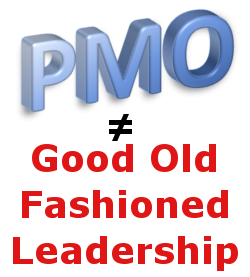 Let me be perfectly clear, I hate PMOs. It matters not if you call them project management offices, program management offices, or portfolio management offices, they only spell one thing—poor leadership. Now those of you that know me, have heard this enough times that your eyes are rolling back as you mumble, "Here he goes again. Who set the bait in front of him this time?" However, I have confused people with a couple of PMO articles that might seem contrary.
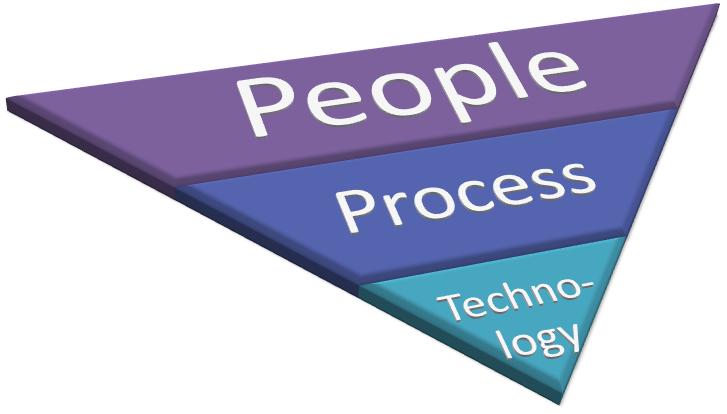
From her corner office, the new executive decried, "Decentralize the PMO. Let each department be responsible for their own projects." Maybe she had made a pact with another executive for some other bit of power, or it could be she lost a power struggle and the PMO had to go, or possibly she has little regards for project management thinking it is a mechanical, blue collar discipline that methodically follows a recipe to execute each project. Bottom line, she is missing the point of the Project Management Office (PMO)—it is all about business goals. Unfortunately, for the company, decentralized PMOs provide little if any value. They are similar to distributed teamwork—an oxymoron. The concept is illogical.
Filling Execution Gaps
Available Worldwide |
|||||||||||||||
.png "Filling Exectution Gaps cover") |
|||||||||||||||
|
Filling Execution Gaps is available worldwide. Below are some options.
|
|||||||||||||||
 Limited Time Price $20.99 |
|||||||||||||||
 |
|||||||||||||||
Book or Kindle
|
|||||||||||||||
 |
|||||||||||||||
 |
|||||||||||||||
 |
|||||||||||||||
 |
|||||||||||||||
| Worldwide: Many other book sellers worldwide. |


Rescue The Problem Project
.png "Buy RPP on our site")
For a signed and personalized copy in the US visit the our eCommerce website.
 |
||
 |
 |
 |
 |
 |
 |
 |
 |
 |
| Book sellers worldwide. | ||
Other's References
- New PM Articles for the Week of November 9 – 15, The Practicing IT Project Manager, November 9, 2015
- The Argument for Disbanding Your PMO, Accellerated IT Success, Nov 13, 2015
- New PM Articles for the Week of September 28 – October 4, The Practicing IT Project Manager, October 4, 2015
- Episode 332: Project Sponsor Challenges and Solutions, PM Podcast, Cornelius Fichtner, September, 2015
- New PM Articles for the Week of December 1 – 7, The Practicing IT Project Manager, December 7, 2014
- How to buy Project Management Consulting Services: Service as a Product (SaaP), Guerrilla Project Management, Samad Aidane, December 2, 2014
- Episode 275: Your Project Statement of Work is Missing a Comma!, PM Podcast, Cornelius Fichtner, June 14, 2014
- State Invites 10 Firms To Shift Cover Oregon To The Federal Health Insurance Exchange, Oregonian, Portland, Nick Budnick, May 28, 2014
- Decision To Scrap Or Salvage Cover Oregon Health Insurance Exchange Poses Risks Either Way, Oregonian, Nick Budnick, Portland, April 9, 2014
- Cover Oregon Consultant: Fix For Health Insurance Exchange Could Take $40 Million, 21 Months, Oregonian, Nick Budnick, Portland, April 4, 2014
- Episode 205: Rescue The Problem Project, PM Podcast, Cornelius Fichtner, June, 2013
- Episode 206: How to Keep your Project out of Trouble, PM Podcast, Cornelius Fichtner, May, 2013
- How to identify, prevent, and recover from project failure, Accellerated IT Success,April 2, 2013
- Episode 260: The Seven Steps to Rescuing the Problem Project, PM Podcast, Cornelius Fichtner, January. 2014
- New PM Articles for the Week of August 6 – 12, The Practicing IT Project Manager, August 12, 2012
- New PM Articles for the Week of June 11 – 17, The Practicing IT Project Manager, June 17, 2012